At some point, we have to ask ourselves as transgender people: Can we join forces to hold the media accountable?
As a transgender publicist, I believe we can — and that accountability can begin with something as simple as paying closer attention to how our community is portrayed, questioning sensationalistic coverage, supporting responsible journalism, and holding media organizations accountable when they publish demonstrably false information.
I am particularly concerned about the growing amount of media coverage in which transgender people and transgender issues are repeatedly presented through controversy, conflict, fear, or political spectacle. When an entire community is repeatedly discussed primarily through negative or sensational framing, I believe it can lead to stigma and make it more challenging for the public to distinguish between legitimate reporting, commentary, political advocacy, and entertainment.
That concerns me not simply as a transgender person, but professionally as a publicist.
What Do We Mean by “Infotainment”?
Merriam-Webster defines “infotainment” as television programming that presents information, such as news, in a manner intended to entertain.
I use the term here to describe media programming that blends information, commentary, entertainment, personality-driven discussion, and sensationalism. I am not suggesting that “infotainment” is a formal legal category, because it is not.
Rather, I am asking audiences to recognize the difference between reporting intended primarily to inform and programming that may use newsworthy subjects in an entertainment-oriented format.
That distinction matters.
A headline can completely transform how people understand an issue before they even start reading. It’s happened to you already over the course of your life, at least thousands if not hundreds of thousands of times already in plain sight. That’s power right there. And that should actually piss you off that we’ve all been manipulated on such a large scale frequency by the media on many issues when you think about it.
Repetition can, and does, unknowingly condition the public’s perception of reality. How the media frames a community affects how broader society views its members.
As a transgender publicist, I am beyond offended, angry, and regularly concerned by media coverage that I find reductive of transgender people such as myself to controversy rather than treating us as human beings whose lives deserve the same journalistic consideration and integrity afforded to the cisgender population as a whole.
Go Deeper and Look Past the Headline
I encourage everyone to ask questions before accepting any media story at face value:
- What is the source of the information?
- Does the actual reporting support the headline?
- Is the story reporting facts, expressing an opinion, or combining the two?
- Are important facts or specific perspectives missing?
- Is the story relying on anonymous claims, commentary, or verifiable documentation?
- Can the underlying information be independently confirmed?
- Is the presentation designed primarily to inform, or does it appear designed primarily to provoke a reaction?
These questions are not limited to stories about transgender people. They are useful whenever we consume media.
The news organizations I personally regard highly for their journalism include:
My support for these two media organizations reflects my personal judgment about their journalism. I am not claiming that any news organization can’t make mistakes.
Follow the Money — and Verify the Facts
I also believe audiences should be willing to investigate the organizations behind the media they consume.
- Who owns the outlet?
- Who owns its parent company?
- How does the organization make money?
- Who advertises with it?
- Who funds or supports it?
- What political or business relationships are publicly documented?
- And, perhaps most importantly, what does the evidence actually reflect?
Those are legitimate questions for any media consumer.
But we should also be careful not to replace one form of misinformation with another. A documented financial relationship is one thing; speculation about someone’s motives or political intentions is another.
We should follow the evidence wherever it leads.
Could Media Framing Affect Public Perception?
I believe it can.
When transgender people are repeatedly presented through stories about controversy, conflict, crime, political battles, or cultural fear, audiences can and do begin to associate transgender identity with those subjects.
That does not mean every journalist an/or media organization covering these issues has malicious intentions. It does not mean every negative story is false. And it does not mean journalists should avoid legitimate reporting simply because a story concerns transgender people.
It means that patterns of coverage deserve heavy and regular scrutiny.
I believe transgender people have every right to question whether the volume, framing, language, and repetition of certain media stories are contributing to unnecessary stigma.
We should be able to criticize media coverage without claiming that every journalist who disagrees with us is acting maliciously.
Media organizations should also be able to defend their journalism by showing their evidence.
That is accountability.
What Does Federal Communications Law Actually Say?
This discussion should not obscure an important legal distinction.
Federal communications law does not establish a general legal category called “infotainment,” nor does it require media organizations to be legally classified as either “news” or “entertainment.”
Section 315 of the Communications Act & the FCC’s regulations address the political “equal opportunities” requirement applicable to television broadcast stations. This law includes exceptions for specific appearances by legally qualified political candidates, including appearances on bona fide news documentaries, newscasts, news interviews, and also news events.
- https://www.fcc.gov/media/policy/statutes-and-rules-candidate-appearances-advertising
- https://www.law.cornell.edu/cfr/text/47/73.1941
In other words, these provisions concern a specific regulatory question: whether particular programming qualifies for an exemption from the political equal-opportunities requirement.
They do not establish a general government determination that a program is “real news” or “fake news.”
That distinction is important.
The FCC has continued to examine these questions in 2026. For example, the Commission addressed guidance on applying the equal-opportunities requirement and the bona fide-news exemptions, including questions involving news interviews and programs with political candidates.
- https://docs.fcc.gov/public/attachments/DA-26-68A1.pdf
- https://www.wiley.law/alert-FCC-Seeks-Comment-on-Whether-ABCs-The-View-Qualifies-as-a-Bona-Fide-News-Interview-Program
The FCC’s 2026 proceedings concerning The View provide another example. The issue involves whether the program qualifies as a bona fide news-interview program for purposes of the applicable equal-opportunities rules. That is a specific regulatory determination — not a government declaration that The View, or other entertainment-oriented programming, is generally “news” or “infotainment.”
- https://docs.fcc.gov/public/attachments/DA-26-68A1.pdf
- https://www.wiley.law/alert-FCC-Seeks-Comment-on-Whether-ABCs-The-View-Qualifies-as-a-Bona-Fide-News-Interview-Program
People should understand that distinction before drawing broader conclusions from these cases.
Accountability Does Not Mean Censorship
I am not calling for the government to decide what journalists can or cannot publish.
I am calling for audiences to become more sophisticated media consumers.
There is a fundamental difference between saying:
“You are not allowed to publish this.”
and saying:
“If you publish this, the public has every right to question it, investigate it, challenge it, criticize it, and decide whether to support your organization with its attention and its money.”
I believe strongly in the second.
The First Amendment protects an extraordinarily broad range of speech, including speech that many people find offensive, biased, unfair, or wrong. At the same time, First Amendment protections do not mean every factual statement published by every media organization is automatically accurate or immune from legal scrutiny.
There are circumstances in which false factual statements can give rise to legal claims. But those questions depend upon the specific statement, the person or organization involved, applicable law, and the circumstances surrounding the publication.
That’s exactly why we, as the general public, should distinguish criticism and opinion from accusations strategically framed as “fact.”
We Can Demand Better Without Abandoning Facts
As a transgender publicist, I believe our community deserves better media literacy, better scrutiny, and better conversations.
That does not require us to agree with every journalist.
It does not require us to reject every story we dislike.
It does not require us to label every unfavorable report propaganda.
And it certainly does not require us to believe that every media organization is part of some coordinated effort against transgender people.
What it requires is that we think critically, go deeper, and look much more closely and with scrutiny.
- Read the entire article.
- Find the source.
- Check the evidence.
- Compare multiple reputable sources.
- Separate reporting from commentary.
- Question sensational headlines.
- Correct demonstrably false information when we encounter it.
- And when we believe a media organization has treated our community unfairly, we should use every lawful and democratic means available to make our concerns known.
- Draft letters to editors, hold their feet to the fire.
- Contact and communicate with news organizations.
- Support ethical journalism and journalists.
- Cease rewarding media outlets whose coverage we believe consistently sensationalizes and misleads the public in a direct way from truth.
- Share media corrections.
- Document media patterns and share your findings with the public.
And, where there is an actual legally cognizable claim involving demonstrably false factual reporting, seek advice from a qualified attorney rather than relying on social-media “influencer” speculation about what the law does or does not permit.
We Have a Voice
I began this article by asking whether transgender people can join forces to hold the media accountable.
I believe the answer is yes, we absolutely fucking can.
But accountability does not require us to silence anyone. It requires:
- The people to become harder to mislead.
- The people to demand evidence.
- The people to distinguish factual journalism from commentary and commentary from fact.
- The people to challenge media sensationalism without responding with our own misinformation.
And it requires us to recognize that transgender people are not merely political subjects, TV segments, clickbait, and/or topics for endless cultural debate.
We are people.
Our lives are real.
Our experiences are real.
Our dignity is real.
And we have every right to participate in the public conversation about how our community is represented.
So don’t simply read the next headline.
Read deeper.
Question it.
Verify it.
Discuss it.
Make your own informed decision about which media organizations deserve your attention, your trust, and your support.
I advocate for my transgender community regularly in the media because our future depends on it. What will you do?
The least you could do is repost what you just read. Start there and remain relentless in your pursuit of truth.
ABOUT DYLAN THOMAS COTTER:
Rebel with a cause, driven by authenticity, self-expression, and liberation for all.
Rev. Dylan Thomas Cotter is a strategist, public relations leader, and brand communications executive with more than fifteen years of experience at the intersection of entertainment, media, and technology.
Cotter is known for securing numerous Tier 1 (top-tier) and Tier 2 media placements across key markets including but not limited to The Associated Press, Fortune, ABC News, GQ, Rolling Stone, Out Magazine, The Advocate, Pride, Inked Magazine, Real Simple, VICE, KTLA, Reader’s Digest, Mashable, Yahoo! News, Yahoo! Life UK, Newsweek, Men’s Health, Parade Magazine, Betches, U.S. News & World Report, Women’s Health Magazine, NursingColleges.com, Women.com, South China Morning Post, Truthout, MIC, The Manual, Curl Magazine, International Business Times UK, TechRound, GB News, The Irish Star US, The Mirror, MSN and AOL.
Cotter is an advisor to founders, artists, and executives on brand positioning, reputation, corporate social responsibility, and strategic communications. As an openly gay transgender professional, Dylan Thomas Cotter is committed to fostering inclusive, respectful, and affirming work environments.
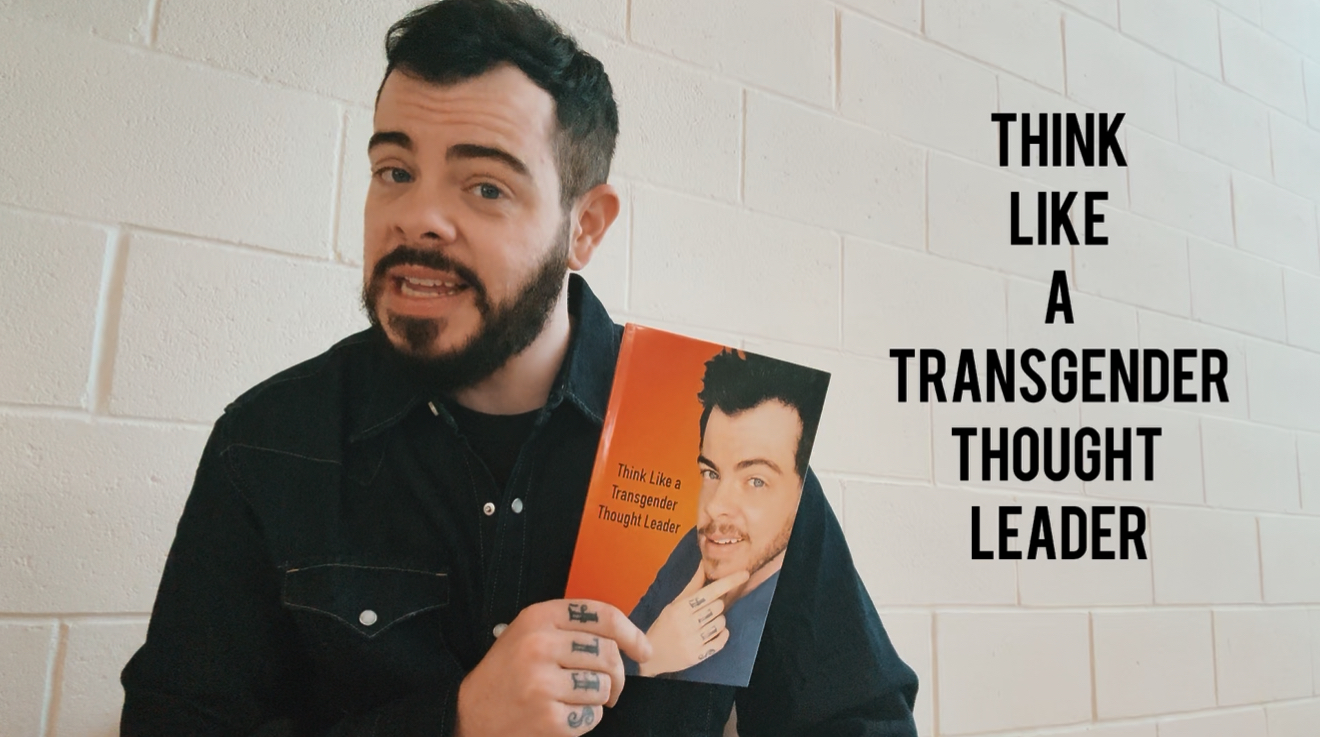
His latest books, Dear Cisgender Reader Walk Beside Me: An Invitation to Understanding My Big, Exciting Gay Transgender Life and Think Like a Transgender Thought Leader, are out now.